My Physical Therapy Glossary
My Physical Therapy Glossary
Hi, my name is Karolane and I'm a student in Health Science. I've been in this program for 3 sessions now, which means that I'm already halfway to the completion of my college degree. Not long ago, I discovered myself a passion for the awesome field of physiotherapy. It's an allied health profession combining exercise prescription with manual therapy and many more tools. It has the main purpose to treat and heal chronic pain, injuries, and traumas. Since I'm far from being able to call myself a physiotherapist, this glossary will mostly inform on several areas that concern physical therapy. It contains 29 terms related to the knowledge and resources used in this profession. I found my definitions on the internet, but I choose my words from what I had the chance to observe in a concrete clinic. I hope this glossary will help you, my dear readers, discover all the possibilities and avenues available in the fantastic world of physiotherapy.
- Allied health professions
- phrase
- Allied health professions are health care professions distinct from dentistry, nursing, medicine, and pharmacy. They provide a range of diagnostic, technical, therapeutic, and support services in connection with health care.
- Example: Physical therapy is recognized as one of the allied health professions.
- en: Professions connexes de la santé

- Cardiovascular system
- phrase
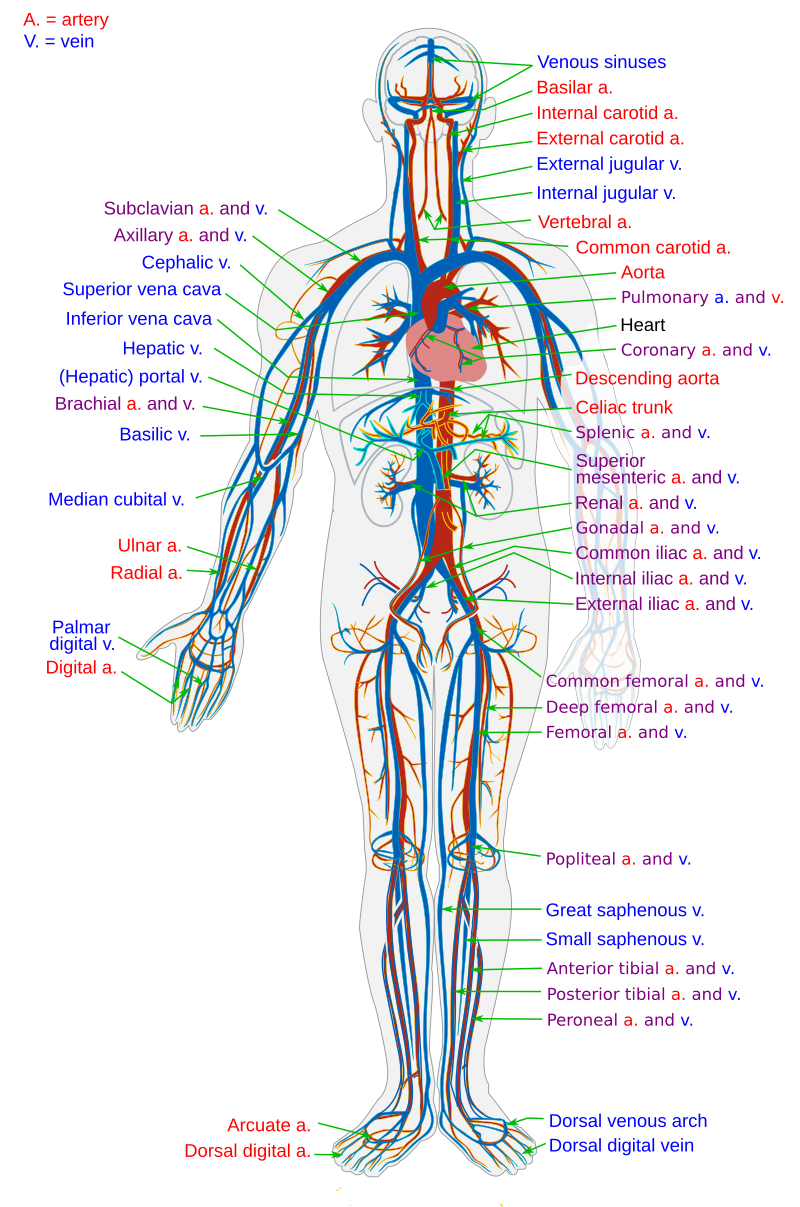
- The circulatory system, also called the cardiovascular system or the vascular system, is an organ system that permits blood to circulate and transport nutrients (such as amino acids and electrolytes), oxygen, carbon dioxide, hormones, and blood cells to and from the cells in the body to provide nourishment and help in fighting diseases, stabilize temperature and pH, and maintain homeostasis. The circulatory system includes the lymphatic system, which circulates lymph.
- Example: Many diseases affect the cardiovascular system .
- en: Système cardiovasculaire
- Chronic pain
- phrase
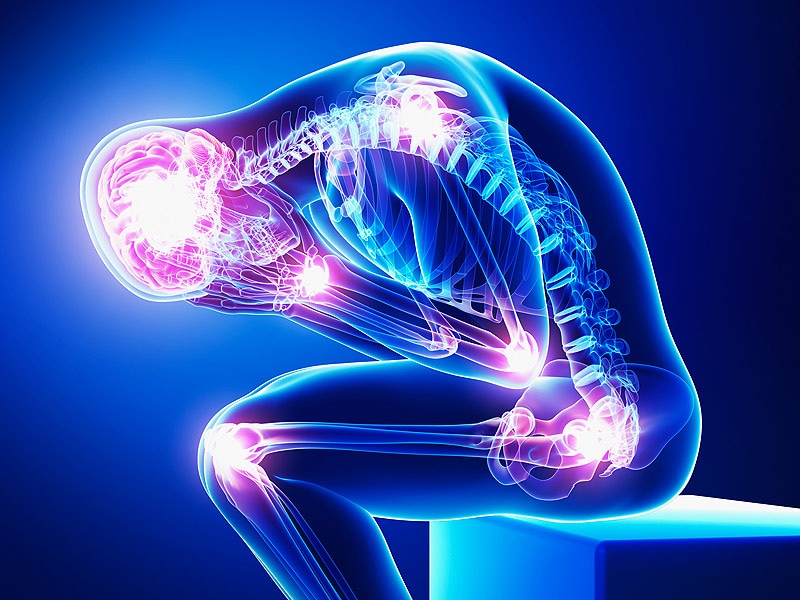
- Chronic pain is pain that lasts a long time, that is prolonged or slow to heal.
- Example: Chronic pain may originate in the body, or in the brain or spinal cord.
- en: La douleur chronique
- Electrical muscle stimulation (EMS)
- phrase
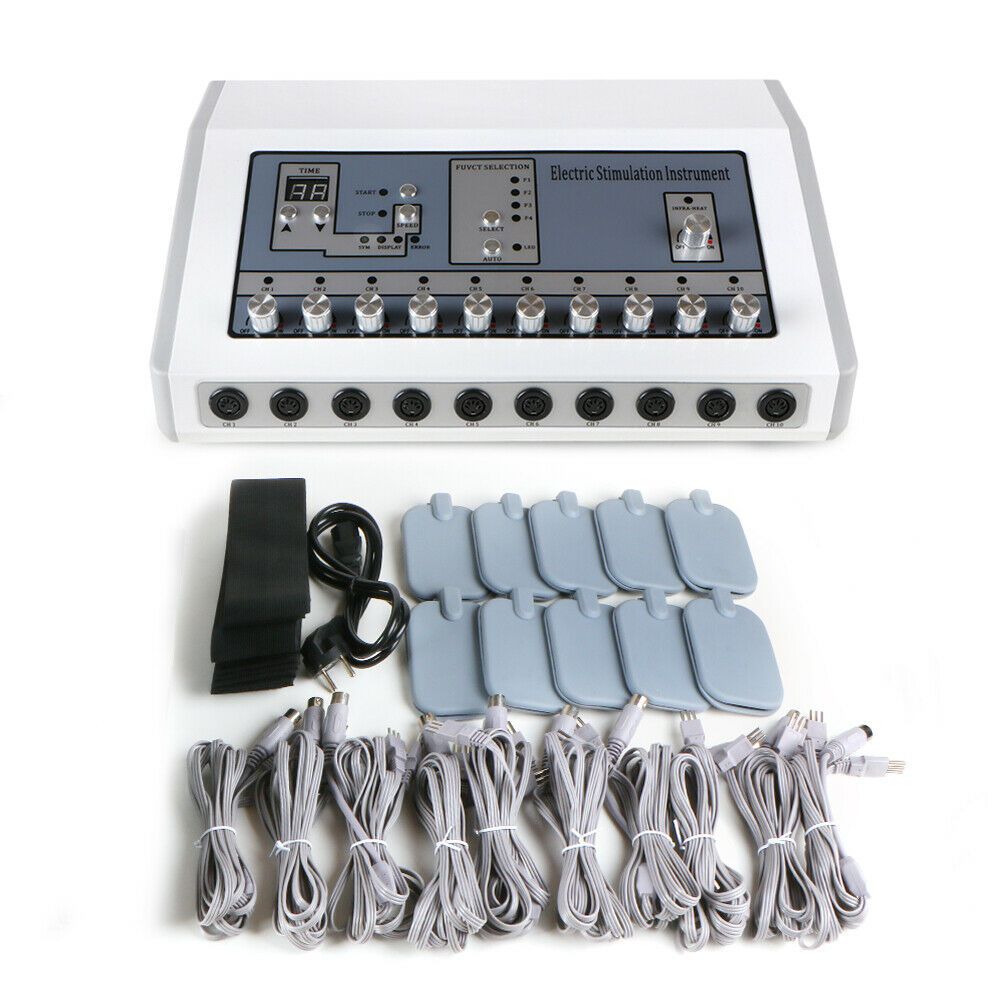
- Electrical muscle stimulation (EMS), also known as neuromuscular electrical stimulation (NMES) or electromyostimulation, is the elicitation of muscle contraction using electric impulses.
- Example: Electrical muscle stimulation can be used as a post-exercise recovery tool for athlete.
- en: Stimulation musculaire électrique
- Electroacupuncture
- noun
- Electroacupuncture is a form of acupuncture where a small electric current is passed between pairs of acupuncture needles. According to some acupuncturists, this practice augments the use of regular acupuncture, can restore health and well-being, and is particularly good for treating pain.
- Example: Electroacupuncture uses two needles at time so that the impulses can pass from one needle to the other.
- en: Électroacupuncture

- Electromyography
- noun
- Electromyography (EMG) is an electrodiagnostic medicine technique for evaluating and recording the electrical activity produced by skeletal muscles. The signals can be analyzed to detect medical abnormalities, activation level, or recruitment order, or to analyze the biomechanics of human.
- Example: Electromyography is used as a diagnostics tool for identifying neuromuscular diseases, or as a research tool for studying kinesiology, and disorders of motor control
- en: Électromyographie

- Endocrine system
- phrase
- The endocrine system is a chemical messenger system comprising feedback loops of the hormones released by internal glands of an organism directly into the circulatory system, regulating distant target organs.
- Example: The endocrine system can be contrasted to both exocrine glands, which secrete hormones to the outside of the body, and paracrine signalling between cells over a relatively short distance.
- en: Système endocrinien

- Exercise prescription
- phrase
- Exercise prescription commonly refers to the specific plan of fitness-related activities that are designed for a specified purpose, which is often developed by a fitness or rehabilitation specialist for the client or patient.
- Example: Due to the specific and unique needs and interests of the patient, the goal of exercise prescription should be focused on motivation and customization, thus making achieving goals more likely to become successful.
- en: Prescription d'exercice

- Geriatrics
- noun
- Geriatrics, or geriatric medicine, is a specialty that focuses on health care of elderly people. It aims to promote health by preventing and treating diseases and disabilities in older adults.
- Example: Geriatrics differs from standard adult medicine because it focuses on the unique needs of the elderly person.
- en: Gériatrie

- Heat therapy
- phrase
- Heat therapy, also called thermotherapy, is the use of heat in therapy, such as for pain relief and health.
- Example: Heat therapy is most commonly used for rehabilitation purposes.
- en: Thérapie thermique
- Hydrotherapy
- noun
- Hydrotherapy, formerly called hydropathy and also called water cure, is a part of alternative medicine (particularly naturopathy), occupational therapy, and physiotherapy, that involves the use of water for pain relief and treatment. The term encompasses a broad range of approaches and therapeutic methods that take advantage of the physical properties of water, such as temperature and pressure, for therapeutic purposes, to stimulate blood circulation and treat the symptoms of certain diseases.
- Example: Various therapies used in the present-day hydrotherapy employ water jets, underwater massage and mineral baths.
- en: Hydrothérapie
- Joint mobilization
- phrase
- Joint mobilization is a manual therapy intervention, a type of straight-lined, passive movement of a skeletal joint that addresses arthrokinematic joint motion (joint gliding) rather than osteokinematic joint motion. It is usually aimed at a 'target' synovial joint with the aim of achieving a therapeutic effect.
- Example: Joint mobilization is used by a variety of health care professionals with specific training in manual therapy assessment and treatment techniques.
- en: Mobilisation conjointe

- Kinesiology
- noun
- Kinesiology is the scientific study of human or non-human body movement. Kinesiology addresses physiological, biomechanical, and psychological dynamic principles and mechanisms of movement.
- Example: Kinesiology is the study of human and nonhuman animal-body movements, performance, and function by applying the sciences of biomechanics, anatomy, physiology, psychology, and neuroscience.
- en: Kinésiologie

- Lumbar spinal stenosis
- phrase
- Lumbar spinal stenosis (LSS) is a medical condition in which the spinal canal narrows and compresses the nerves and blood vessels at the level of the lumbar vertebrae. Spinal stenosis may also affect the cervical or thoracic region, in which case it is known as cervical spinal stenosis or thoracic spinal stenosis. Lumbar spinal stenosis can cause pain in the low back or buttocks, abnormal sensations, and the absence of sensation (numbness) in the legs, thighs, feet, or buttocks, or loss of bladder and bowel control.
- Example: Medical professionals may clinically diagnose lumbar spinal stenosis using a combination of a thorough medical history, physical examination, and imaging (CT or MRI).
- en: Sténose lombaire

- Manual therapy
- phrase
- Manual therapy, or manipulative therapy, is a physical treatment primarily used by physical therapists, physiotherapists to treat musculoskeletal pain and disability; it mostly includes kneading and manipulation of muscles, joint mobilization and joint manipulation.
- Example: Manual therapy is usually practiced by members of specific health care professions.
- en: Thérapie manuelle
- Muscle
- noun
- Muscle is a soft tissue found in most animals. Muscle cells contain protein filaments of actin and myosin that slide past one another, producing a contraction that changes both the length and the shape of the cell. Muscles function to produce force and motion. They are primarily responsible for maintaining and changing posture, locomotion, as well as movement of internal organs, such as the contraction of the heart and the movement of food through the digestive system via peristalsis.
- Example: Muscles are predominantly powered by the oxidation of fats and carbohydrates, but anaerobic chemical reactions are also used, particularly by fast twitch fibers.
- en: Muscle

- Musculoskeletal system
- phrase
- The human musculoskeletal system (also known as the locomotor system, and previously the activity system) is an organ system that gives humans the ability to move using their muscular and skeletal systems. The musculoskeletal system provides form, support, stability, and movement to the body. It is made up of the bones of the skeleton, muscles, cartilage, tendons, ligaments, joints, and other connective tissue that supports and binds tissues and organs together.
- Example: The musculoskeletal system's primary functions include supporting the body, allowing motion, and protecting vital organs.
- en: Système musculo-squelettique

- Neurology
- noun
- Neurology is a branch of medicine dealing with disorders of the nervous system. Neurology deals with the diagnosis and treatment of all categories of conditions and disease involving the central and peripheral nervous systems (and their subdivisions, the autonomic and somatic nervous systems), including their coverings, blood vessels, and all effector tissue, such as muscle.
- Example: Many neurologists also have additional training or interest in one area of neurology, such as stroke, epilepsy, neuromuscular, sleep medicine, pain management, or movement disorders.
- en: Neurologie

- Occupational therapy
- noun
- Occupational therapy (OT) is the use of assessment and intervention to develop, recover, or maintain the meaningful activities, or occupations, of individuals, groups, or communities. It is an allied health profession performed by occupational therapists and occupational therapy assistants (OTA). OT's often work with people with mental health problems, disabilities, injuries, or impairments.
- Example: The emergence of occupational therapy challenged the views of mainstream scientific medicine.
- en: Ergothérapie

- Orthopedics
- noun
- Orthopedics, also spelled orthopaedics, is the branch of surgery concerned with conditions involving the musculoskeletal system. Orthopedic surgeons use both surgical and nonsurgical means to treat musculoskeletal trauma, spine diseases, sports injuries, degenerative diseases, infections, tumors, and congenital disorders.
- Example: Originally, the term orthopedics meant the correcting of musculoskeletal deformities in children.
- en: Orthopédie
- Osteoarthritis
- noun
- Osteoarthritis (OA) is a type of joint disease that results from breakdown of joint cartilage and underlying bone.The most common symptoms are joint pain and stiffness. Usually the symptoms progress slowly over years.
- Example: Osteoarthritis commonly affects the hands, feet, spine, and the large weight-bearing joints, such as the hips and knees, although in theory, any joint in the body can be affected.
- en: L'arthrose

- Patient education
- phrase
- Patient education is the process by which health professionals and others impart information to patients and their caregivers that will alter their health behaviors or improve their health status.
- Example: Important elements of patient education are skill building and responsibility: patients need to know when, how, and why they need to make a lifestyle change.
- en: Éducation du patient

- Physical examination
- phrase
- In a physical examination, a medical practitioner examines a patient for any possible medical signs or symptoms of a medical condition. It generally consists of a series of questions about the patient's medical history followed by an examination based on the reported symptoms. Together, the medical history and the physical examination help to determine a diagnosis and devise the treatment plan.
- Example: Physical examinations are performed in most healthcare encounters.
- en: Examen physique
- Rehabilitation
- noun
- Rehabilitation is a therapy to regain or improve neurocognitive function that has been lost or diminished.
- Example: Occupational rehabilitation is a therapy to return injured workers to an appropriate level of work activity.
- en: Réhabilitation

- Respiratory system
- phrase
- The respiratory system (also respiratory apparatus, ventilatory system) is a biological system consisting of specific organs and structures used for gas exchange. It takes up oxygen and discharges carbon dioxide in order to satisfy energy requirements.
- Example: Other animals, such as insects, have respiratory systems with very simple anatomical features, and in amphibians even the skin plays a vital role in gas exchange.
- en: Système respiratoire

- Spinal manipulation
- phrase
- Spinal manipulation is an intervention performed on spinal articulations which are synovial joints, which is asserted to be therapeutic.
- Example: Spinal manipulation is frequently associated with mild to moderate temporary adverse effects, and also rare serious outcomes which can result in permanent disability or death.
- en: Manipulation vertébrale

- Sports medicine
- phrase
- Sports medicine is a branch of medicine that deals with physical fitness and the treatment and prevention of injuries related to sports and exercise.
- Example: Sports medicine can refer to the specific medical specialty or subspecialty of Sports Medicines.
- en: Médecine du sport
- Therapeutic ultrasound
- phrase
- Therapeutic ultrasound refers generally to any type of ultrasonic procedure that uses ultrasound for therapeutic benefit.
- Example: Physiotherapeutic ultrasound was introduced into clinical practice in the 1950s.
- en: Ultrasonothérapie

- Trauma
- noun
- Physical trauma is damage to the body caused by external force. This may be caused by accidents, falls, hits, weapons, and other causes.
- Example: Major trauma is injury that has the potential to cause prolonged disability or death.
- en: Traumatisme

